For all of its beauty and joy, this world is founded on pain and loss. Darwin is not a challenge to Christian belief because he shows how species arise over time (rather than being created at one fixed point) but because he makes it impossible to imagine a time before death and pain entered the world. They have been the constant companions of creation, in all their nastiest forms. Even creationists cannot believe that Adam brought death into the world.
Whatever the theological problems this raises, the solution does not include running away. The Israelites in the desert tried that, and died. The cure they were offered was staring at the very thing they feared. They were to stare hard at the serpent death which terrified them so, according to Rabbi Arthur Waskow and Rabbi Phyllis Berman in Red Cow, Red Blood, Red Dye: Staring Death & Life in the Face.
For Christians this becomes even more poignant. For us it is Christ who becomes the serpent on a pole. Looking at him, we see what horrifies us; agonising suffering and bloody death. It is easy, with practise, to become complacent about it, seeing new life springing from this agony. We do not serve our God well by doing so.
The serpent in the wilderness was offered to allow the people of God to face their terrors. They looked into the pit of the image of death. Christ offers us the image of our worst imaginings, and of all the suffering of nature. Every meadow pipit pushed out by the baby cuckoo, every caterpillar split open by the parasitic wasp who has eaten though it, each is summoned up in the image of the creator of them dragging out a slow death from suffocation. Lifted up so, he draws all to him.
Somewhere in this, I feel, lies something of a solution. It is far from an intellectually satisfying solution. Yet it is played out again and again. Suffering can demean and destroy, and yet on occasion individuals can transcend themselves through it. These last months have seen the suffering of the Cameron family and of Jade Goody. The circumstances are totally different, yet, yet… The extraordinarily moving exchange in the Commons between two bereaved fathers, both knowing the constant anxiety of having a child with a life-limiting disease was a moment of reality in the too-often artificial rhetoric of that cold institution. Jade Goody’s decision not to hide her slow descent to death has opened up conversations about facing death over the whole country.
I am not speaking of the general need to address urgent problems, true as it is that we must. There are many issues on which we are out of time, and running faster will not serve us. Unpleasant truths about the thoughts of those who are our co-religionists. Painful realisations about the financial state of many of our congregations. Nasty facts about the age structure of those congregations, and just why they are so structured. Not to mention the now fast-ticking bomb of ecological disaster.
All this is true and urgent, but it is only a weak reflection of the story of the bronze serpent and the man on the cross. That promise is about facing the terror of pain and death in the word, and being blessed in the facing of it. That story underlies all the other terrors we need to deal with, and if we do not face it, we cannot face them. We need to turn and face that serpent because only by looking steadily on its face can we hope to gain healing for our other ills.
16 CommentsUpdated Saturday evening
This press release comes from the Church of England:
Lambeth Conference: funding
The Lambeth Conference Funding Review Group has published its report. The review was commissioned last August by the Board of Governors of the Church Commissioners, and the Archbishops’ Council of the Church of England following an approach from the Lambeth Conference Company* for financial help.
The Review Group, chaired by John Ormerod, a former partner of accountancy firm Deloitte, makes a number of recommendations to be acted on by the Lambeth Conference Company and the Anglican Communion Office.
The Board of Governors of the Church Commissioners and the Archbishops’ Council each agreed, last August, to make available to the Lambeth Conference Company up to £600,000 as required to enable the Company to honour its commitments while fundraising efforts continued. Both bodies regarded these amounts as interest free loan facilities. Of the £388,000 actually borrowed by the Company, £124,000 has now been repaid, leaving £132,000 owing to each organisation as fundraising continues.
By the end of 2008, the review reports, the projected deficit had reduced from an estimate of over £1 million in August 2008 to £288,000, in part as a result of further fundraising efforts and in part due to actual costs proving lower than had been cautiously projected earlier in the year. The total cost of the event was £5.2million, as against the budget of £6.1million.
*The Lambeth Conference Company is the body given responsibility for managing the finances and administration of the Lambeth Conference 2008.
The main report is available as a .doc file.
Update Now also available as a PDF file.
Appendices are available as a PDF file.
From the Notes to editors:
9 CommentsThe review group’s members were: (chair) John Ormerod, a former partner of accountancy firm Deloitte; the Rt Revd Tim Stevens, Bishop of Leicester and member of the Archbishops’ Council; Dr Christina Baxter, principal of St John’s theological college, Nottingham and also an Archbishops’ Council member; and Timothy Walker, Third Church Estates Commissioner. The group had staff support from two people provided via the office of the Church Commissioners.
There has already been generous support from the Church of England for the Lambeth Conference. Parishes and dioceses have made donations towards the costs of overseas bishops attending and the Church Commissioners have met the fees of the English bishops and their wives attending the Lambeth Conference, the costs of some of the conference organising staff, and some of the hospitality offered by the Archbishop of Canterbury.
The United States government has announced it will support the UN resolution concerning decriminalisation of homosexuality.
This is a resolution that the Vatican did not support, but about which it did say:
“The Holy See appreciates the attempts made in [the declaration] to condemn all forms of violence against homosexual persons as well as urge states to take necessary measures to put an end to all criminal penalties against them.”
Savitri Hensman has written at Comment is free that Nigeria’s attack on human rights has no virtue. She writes:
5 Comments…Yet several church leaders have spoken in favour of the bill, including Rev Patrick Alumake, who claims to represent the Roman Catholic Church, though his stance appears to defy Vatican policy. While hardly gay-friendly, this opposes criminalisation. It will be revealing to see how Rome reacts.
Another champion of the bill has been Archbishop Peter Akinola, though the international Anglican Communion, to which his church belongs, has repeatedly called for human rights for all, including homosexuals.
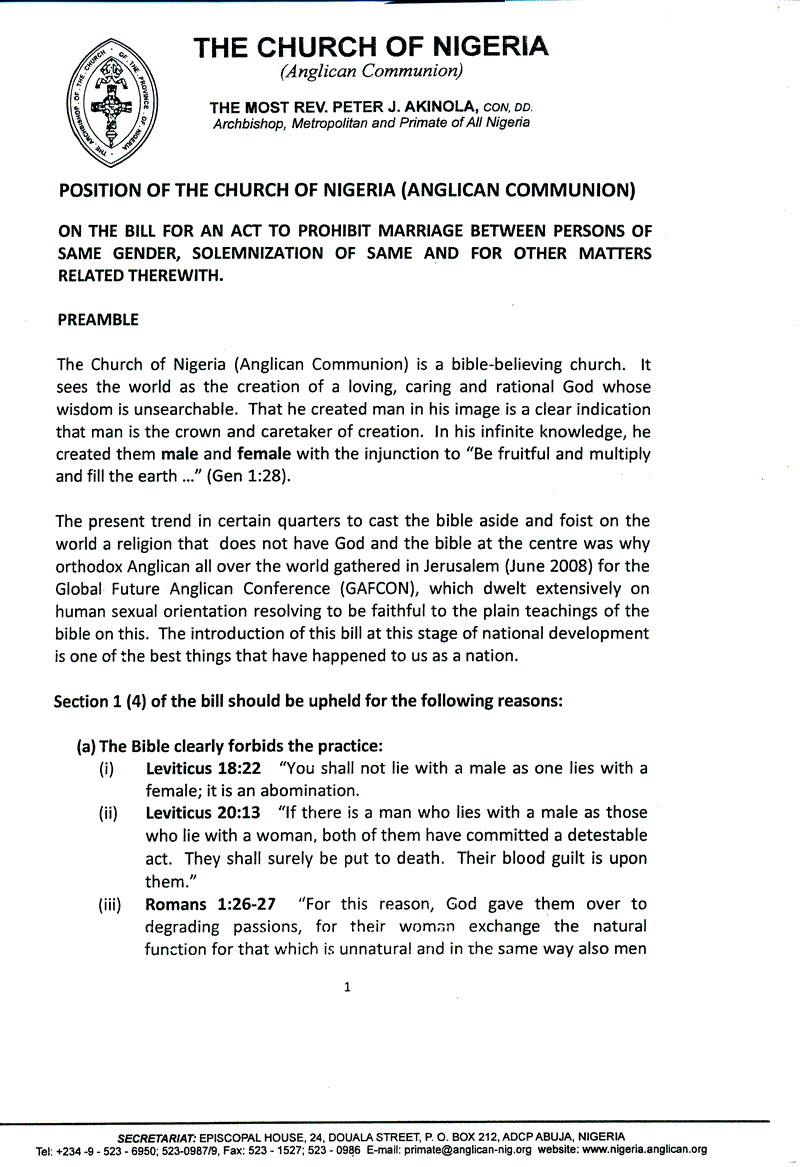
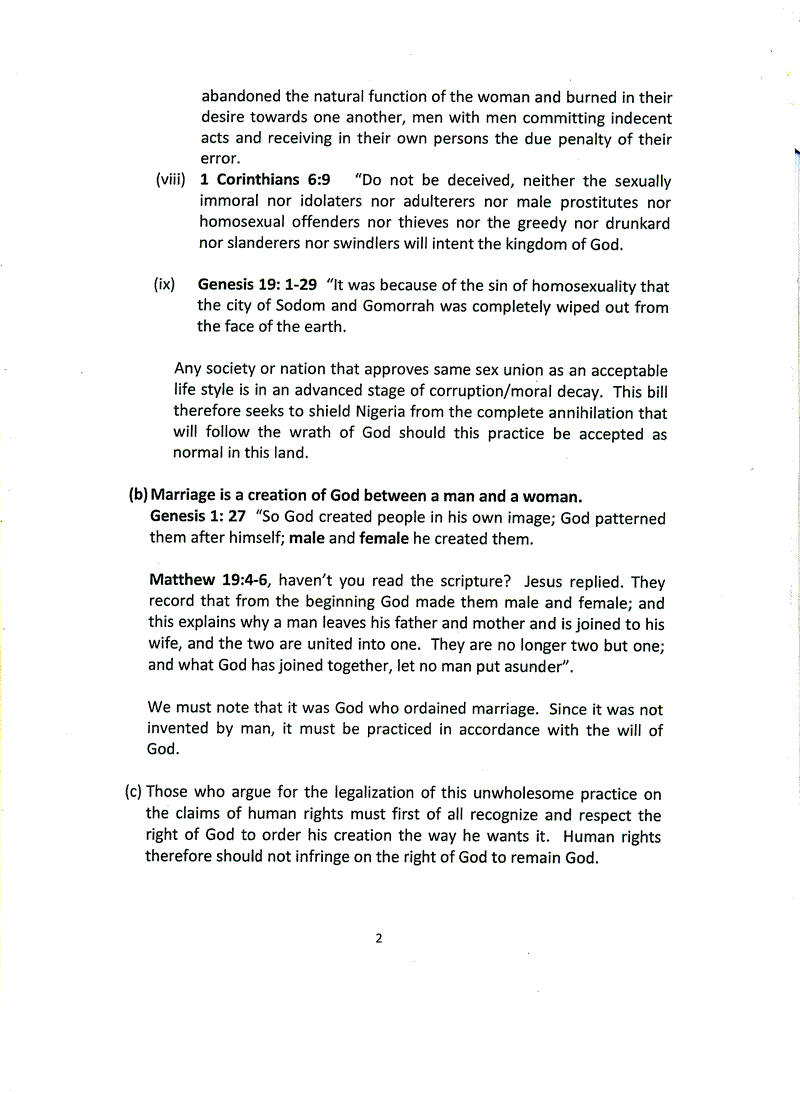
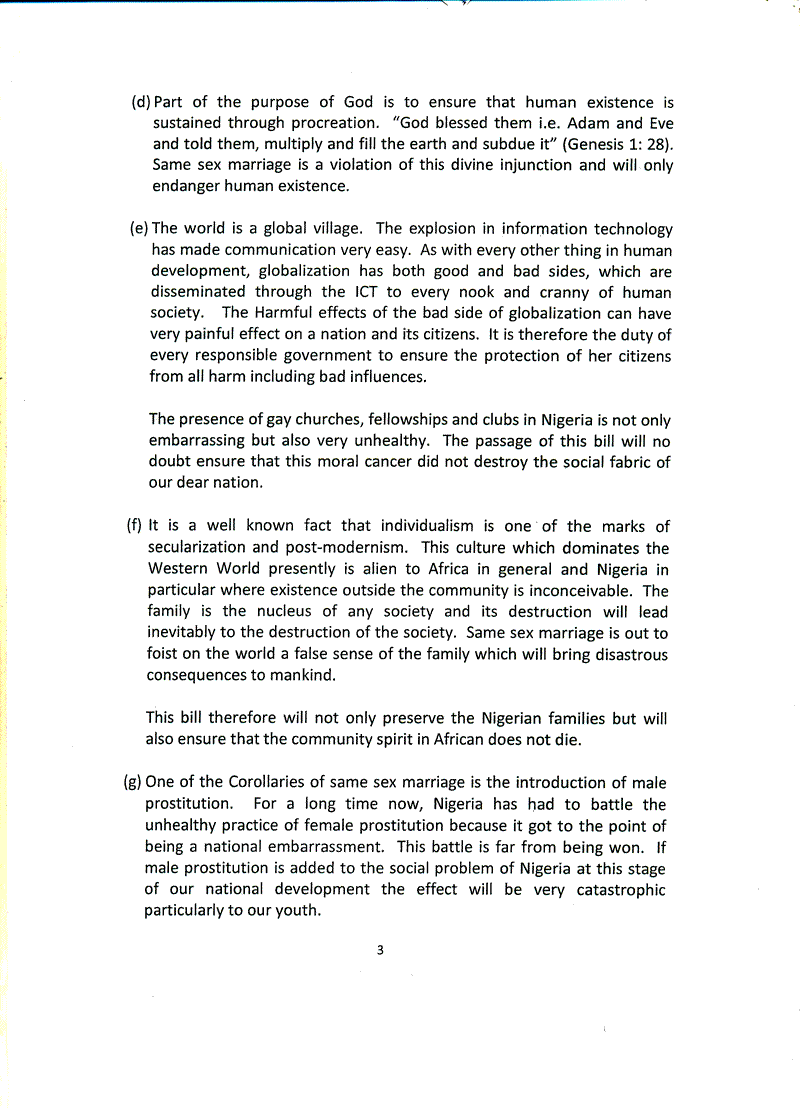
In a statement supporting the bill, Archbishop Akinola starts with his own (contested) interpretation of the Bible, and warns, “Any society or nation that approves same sex union as an acceptable life style is in an advanced stage of corruption/moral decay. This bill therefore seeks to shield Nigeria from the complete annihilation that will follow the wrath of God should this practice be accepted as normal in this land.” He goes on to make further extraordinary claims: “Part of the purpose of God is to ensure that human existence is sustained through procreation. God blessed them ie Adam and Eve and told them, multiply and fill the earth and subdue it” (Genesis 1: 28). Same sex marriage is a violation of this divine injunction and will only endanger human existence.” The fact that these dire predictions have not come to pass elsewhere in the world does not deter him.
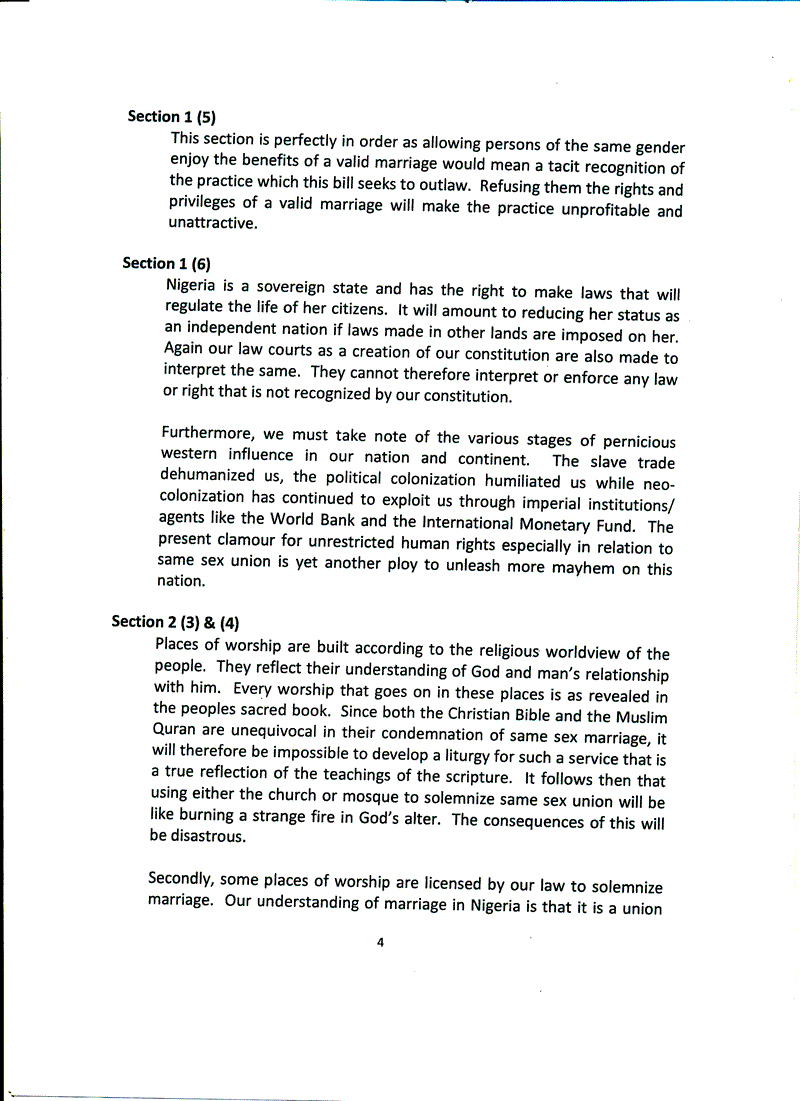
Despite the major historical contribution made by Africans (including Nigerians) in winning recognition for and defending human rights, he is dismissive of these: “We must take note of the various stages of pernicious western influence in our nation and continent … The present clamour for unrestricted human rights especially in relation to same sex union is yet another ploy to unleash more mayhem on this nation.”
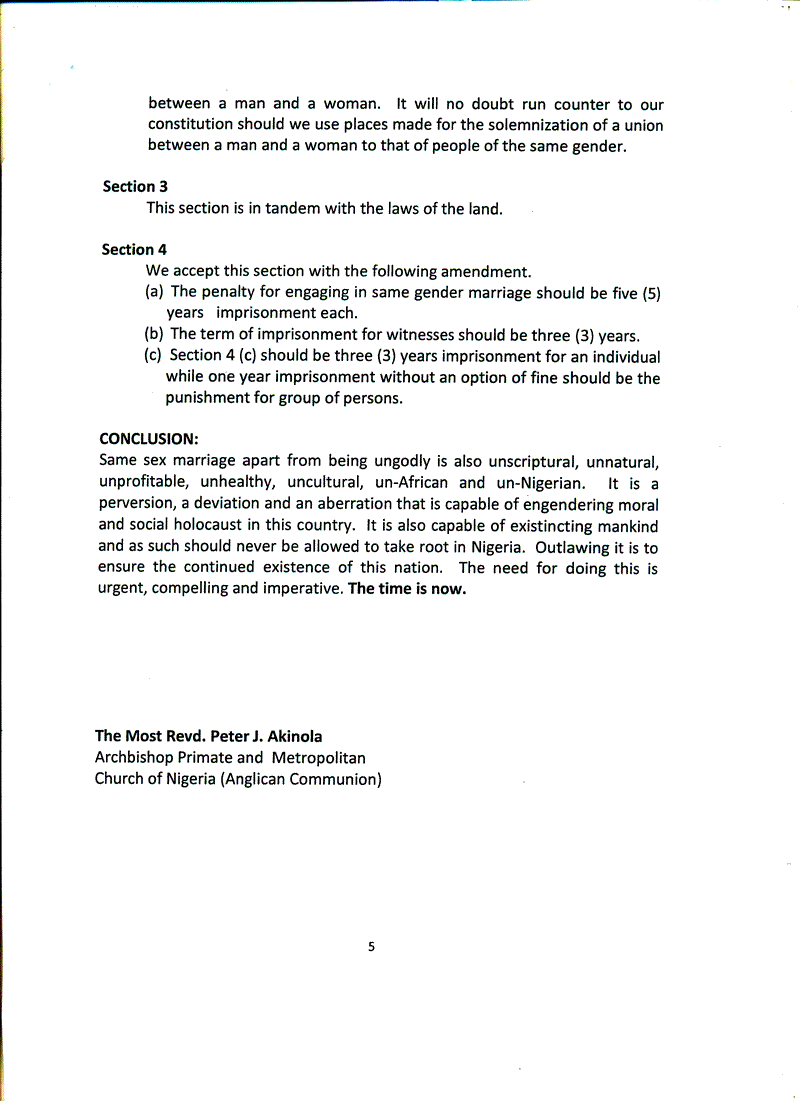
The Archbishop’s portrayal of the threat posed by gays and lesbians would appear to justify even the harshest measures: “Same sex marriage… is a perversion, a deviation and an aberration that is capable of engendering moral and social holocaust in this county. It is also capable of existincting (sic) mankind and as such should never be allowed to take root in Nigeria.” In this apocalyptic worldview, it can be too risky to love one’s neighbour as oneself…
The Standing Committee of the Church of Nigeria (Anglican Communion) is much larger than you would suppose from its name and normal Western usage of that term:
The Standing Committee of the Church of Nigeria (Anglican Communion) under the guidance of the Holy Spirit and the leadership of the Most Rev. Peter J. Akinola, Archbishop, Metropolitan and Primate of All Nigeria, met at All Souls Chapel and Oduduwa Hall at Obafemi Awolowo University, Ile Ife, Osun State, from March 10-14, 2009. The Standing Committee serves as the Executive Body of the Church of Nigeria between meetings of the General Synod. One hundred and fifty five bishops, one hundred and fifty clergy and one hundred and thirty nine laity were present…
The General Synod must be truly huge in scale.
See earlier item for the Primate’s Opening Remarks.
This body has issued a Communiqué which includes the following:
21 Comments5. RELIGIOUS CRISIS
For more than twenty years there has been an unrelenting religious crisis in Nigeria. The Christian Church has been the target of attack and has suffered irreparable losses in many parts of the North. At different times various reasons have been advanced: unemployment, poverty, politics and sectarian tensions. However, those who have perpetrated these destructive actions have never been brought to justice, operate with impunity and appear to be motivated by the conviction that if they persist they will be able to claim entire sections of Nigeria for their faith. We reject this claim.
We also view with grave concern the recent inflammatory statement by Senator Ahmed Sani Yerima calling for the total Islamization of Nigeria. This attitude threatens the very existence of our nation. Since this call violates specific Constitutional provision for the freedom of religion and his pubic oath to protect the Constitution we ask the leadership of the Senate to investigate as to whether Senator Yerima is qualified to continue to hold office.
We call for a national conference of all relevant stakeholders especially the National Assembly, Media practitioners, religious leaders and the guardians of our constitution to deal with these issues and plan for a peaceful and just future for Nigeria. We are convinced that unless urgent action is taken we may have no future for the next generation.
6. OUR ASSURANCE
As Anglican Christians we continue to be distressed by the spiritual crisis within our own family of faith in other parts of the world. Since 2003 the unilateral revisionist actions of The Episcopal Church and the Anglican Church Canada have torn the fabric of our common life. While the Church of Nigeria stands resolutely and uncompromisingly on the truth of the Holy Scriptures and the Lordship of Jesus Christ endless meetings and repeated communiqués have done nothing to bring restoration of our beloved communion. In this, however, and in all these matters our hope is not in our own efforts but in the Lord Himself. We can therefore boldly declare to our nation and to the world, “Those who hope in the LORD will renew their strength. They will soar on wings like eagles; they will run and not grow weary, they will walk and not be faint. (Isaiah 40:31)
An earlier report on Anglican women at the UNCSW is here.
The links to some documents in that article are now broken, apologies.
Here are some new reports and documents:
UN Commission on the Status of Women Fifty-third session, 2– 13 March 2009
ACNS:
4 CommentsThe Church of England has announced today:
Church publishes inspection reports
The Church of England today publishes inspection reports on two of its ministerial training colleges.
The Church has a long track record of ensuring the quality of the initial training of its clergy by regular inspection of its training institutions. Theological colleges and part-time training courses are inspected every five years by teams of inspectors appointed by the bishops of the Church of England. Where training is delivered ecumenically, Church of England inspectors work in partnership with teams from the Methodist Church, the United Reformed Church and the Baptist Union.
In the past the reports have been confidential to bishops and church leaders, but from today inspection reports will appear on the Church of England website. Inspection reports on the institutions of partner churches will appear on their websites. At first there will only be a limited number of reports, because training institutions are only inspected every five years. Over the coming years a full set of reports will appear.
See Quality Assurance in Ministerial Education and The Quality Framework for Ordination Training.
The first two reports are available as PDF files from this page:
Wycliffe Hall has published this press release: Bishops’ Inspection 2008 and there is also this PDF file containing Wycliffe Bishop’s [sic] Response:
Statement by the Bishop of Liverpool (Chair of Council)
Bishop of Chester (Chair-designate of Council)
Bishop of Birmingham17 March 2009: We are grateful to the Inspectors for their work, and for the wide endorsement which they give to Wycliffe Hall and its work. We are pleased that the Inspectors have confidence in Wycliffe, and we note their qualifications. In particular we welcome their recognition that the difficulties of recent years in relation to staff relationships are now largely overcome.
We welcome the recommendations of the Inspectors, and the Council and staff will do their utmost to ensure that they are given very careful consideration, and are acted upon.
We regret that the Inspectors have judged it right to declare that they have no confidence in one area of the Hall’s life, in relation to aspects of Practical and Pastoral Theology. We doubt that the evidence which the Inspectors adduce merits such a stark assessment, but we will ensure that the recommendations which are made in relation to this area are given speedy and particular attention. We share the confidence that the Inspectors have that Wycliffe Hall is fit for purpose, and look forward to maintaining its high academic standards and formation of both men and women for ordained ministry in the Church of England.
+ James Liverpool
+ Peter Cestr
+ David Birmingham
Several downloads are available here, which contain submissions made to the inspectors.
St Stephen’s House has also published a press release: Response to the Publication of the Inspection Report 2008
19 CommentsThe Diocese of Manchester reports: Bishop silenced by email failure:
1 million spams and a virus bring down Bishop of Manchester & Church of England email systems.
The central offices of the Diocese of Manchester were without email from 3-13 March (10 days) following a virus infecting its servers and an unprecedented amount of spam. The problems have also affected the Bishops of Manchester and other senior clergy in the diocese.
While some emails have now been restored, others are still not getting through, particularly to satellite offices.
Two weeks ago, following continuing concerns over missing e-mails and an unacceptably high occurrence of breaks in service, the diocese changed its IT provider.
The new IT technicians discovered a virus and tried to remove it. While doing so they found that it had severely corrupted systems. This has meant that, since 3 March, e-mails sent to the Diocese of Manchester central offices, its Archdeacons, and the Bishops of Bolton and Middleton have not been received, nor have they been able to send e-mails. E-mails sent via the Diocese of Manchester website have not been delivered either.
In addition, an audit of the 6000 pieces of communications sent by the Bishop of Manchester over the past ten months revealed that a significant amount of electronic mail, though sent by the Bishop, may have been deleted during sending or has simply not been delivered by the system. In addition, many emails sent to the Bishop may not have been received.
A spokesman for the Bishop said, “Given the nature and scale of the problem it is likely that the Bishop will never fully know which e-mails failed to arrive nor the number of emails that were sent by others to him but were never received by his office. If people have written or emailed the Bishop of Manchester during the past ten months and not received a reply, it is likely that a system failure is to blame.”
“The new IT providers have been given the brief of establishing, as an urgent priority, a cast iron IT system for Bishops, Archdeacons and our central administration. If an e-mail is sent to us and a reply or acknowledgement has not been received within three days, then individuals should follow-up the message with a phone call. As a policy, where possible, people should always request a receipt when sending e-mail to us.”
As the Manchester Evening News reports:
11 CommentsThe problem is particularly embarrassing because Mr McCulloch serves as the CoE’s communications spokesman.
Updated Tuesday evening
The Bishop of Winchester, Michael Scott-Joynt, has expressed his opinions on this subject in a lecture, given recently at St Paul’s School of Theology in St Helier, Jersey.
(The Channel Islands are annexed to the Diocese of Winchester.)
You can read the full text of his lecture on the diocesan website, at Bishop Michael on the Future of the Church of England.
Here’s a teaser:
…I am now going to examine some of the specific questions, challenges, realities in the life of the Church of England today which, I think, may be causing people to ask the question that is the title of this Lecture – or at least to think that such a title is worth offering to me, and I to think it worth accepting! I could have arranged them in more than one order; the order that I have chosen is only sometimes that of the importance that I see them having, the level of threat that I see them posing!
Disestablishment
Secularisation of politics and public life
Women and the Episcopate
Same-sex sexual behaviour,
Decline from orthodox teaching
Division of the Anglican Communion
Islam
Ecumenical developments
Financial Pressures
Absorption in, distraction by, these!
Tuesday update
Andrew Brown has commented on this lecture at Cif Belief in Secularism threatens British Christianity, says bishop.
24 Comments… I remember debating this last question with him from one of the twin pulpits of St Mary le Bow, and how impressed I was by his utter imperviousness to arguments from educated secular opinion.
Now he has published a talk he gave recently on the threats to the continuation of the Church of England, and it’s clear that he thinks that educated secular opinion is one of the main hostile forces facing his church…
Terry Philpot wrote for the Guardian about the RC adoption societies, see Face to Faith.
Sara Maitland wrote in The Times about Why the Via Dolorosa can be a powerful experience.
Giles Fraser wrote in the Church Times about Grounding ideology in people. See New England – Kirsty MacColl at the Church Times blog for background material.
Alexandru Popescu wrote at Comment is free about An iconic power.
James W. Jones wrote in the Church Times last week about Churches talking past each other. Many in the C of E misunderstand the Episcopal Church in the US, he says.
Robert Pigott at the BBC has written another Faith Diary.
17 CommentsFurther excerpts from Meeting of the CON Standing Committee: PRIMATE’S OPENING REMARKS:
The Anglican Communion
Early last month at the invitation of the Archbishop of Canterbury, the Primates of the Anglican Communion had their meeting in an atmosphere of ‘peace and mutual respect’ for five days in Alexandria, Egypt. Perhaps the greatest achievement of the meeting was that the ‘status quo ante’ was maintained. That is to say that we remain as we have been since 2003 when the unilateral revisionist actions of TEC and Canada tore the fabric of our common life, in a state of impaired or broken sacramental communion. We have not been able to deal with the fundamental problems of our brokenness nor see through decisions taken at previous meetings of the Primates.
It seems to me the Communion is playing a game of ‘just keep talking’ until perhaps someone will blink or become weary and give up the struggle. Confident that we are on the LORD’s side contending for the faith once delivered to the saints, we can rest assured that: “those who hope in the LORD will renew their strength. They will soar on wings like eagles; they will run and not grow weary, they will walk and not be faint.” On this vexatious issue, the Church of Nigeria will neither blink nor be weary.
On my return from Egypt, I issued a letter to the faithful titled ‘a wake up call’. I also sent an open letter to our chairman, Dr Rowan. In both, I made it clear that America is not thinking of backing off from its new religion. And the rest of us desiring to keep the unity and structures of the Communion by all means including losing our faith and churches risk the danger of becoming a church that has the appearance of being alive but in reality are no more than what Prof John Mbiti once described as the ‘living-dead.’
The Global South
The Primates and leadership of the Global South also met and decided to call the ‘fourth trumpet’ in the first quarter of 2010, perhaps in the UK. The last one was held in Ein Sukhnan, near the red sea, Egypt. Each of our Provinces will be represented by the Primate, a bishop, a senior priest, lay leaders comprising of a man, a woman and a youth.
GAFCON
GAFCON continues to wax stronger. Membership of the Fellowship of Confessing Anglicans is growing in many parts of the world beyond our own imagination. Here at home, some of our senior lay leaders (Fellowship of Christian Patriots, FCP) organised a two-day celebration of the ideals of GAFCON with special lectures and service of praise and thanksgiving to God. We are deeply grateful to the Christian Patriots. I urge all our members to obtain copies of the lecture. The GAFCON Primate’s Council will meet in the UK after Easter. I ask for your prayers.
7 CommentsUpdated Saturday afternoon
See previous articles here, here, and here.
Andrew Brown has commented about this at Comment is free: Belief in The latest hate speech from the Church of Nigeria.
Pluralist has commented on his blog in Expel the Nigerian Church – Time to Move On.
Episcopal Café has a further article, Nigeria’s legal system adequate for persecution.
The US State Department report mentioned there can be found at 2008 Human Rights Report: Nigeria.
The current legislation is not the same as that proposed in 2006 which was also commended by the Church of Nigeria.
There is no mention of this matter at the website of CANA, but the front page does have this in the sidebar:
Every person is made in the image of God and deserves to be treated that way.
-the Rt Rev’d. Martyn Minns
Episcopal Café points out that Martyn Minns and Robert Duncan are among the bishops at the Church of Nigeria House of Bishops meeting, read Meeting of the CON Standing Committee: PRIMATE’S OPENING REMARK [sic] from the official website of the Church of Nigeria (Anglican Communion):
5 CommentsWe are glad to welcome back home our CANA bishop, Martyn Minns. With us at this meeting is Bishop Bob Duncan of Pittsburgh. Bob leads the Common Cause Partnership that will soon metamorphose against all odds into a new Anglican Province in North America.
According to the official Vatican newspaper, the washing machine has done more to liberate women than anything else in the 20th century. One has to ask where the Vatican gets the information on which to base this kind of conclusion. This is particularly necessary in the light of the public admission that a failure to read the news meant that the Pope committed a major blunder in readmitting to communion someone who denied the Holocaust, Richard Williamson. At least the Pope responded on this occasion to the worldwide outrage which his action had caused.
No such response has come from the Roman Catholic Church to the story that a nine year old girl has been excommunicated. The Brazilian child had been abused for years by her stepfather. She went to hospital to investigate a pain and was found to be four months pregnant, carrying twins. Fearing for her life, doctors gave her an abortion. The response of Cardinal Giovanni Batista Re, who heads the Pontifical Commission for Latin America, was that the twins had a right to life and that the mother and those involved in the abortion should be excommunicated. The Church said nothing about the man who raped the girl.
Punishing a nine year old child in this way when she needs all the love and support the Church can give is barbaric. Brazilian authorities, in a country which only allows abortion in exceptional circumstances, had made the reasonable judgement that this case was one in which the mother’s life was the prime concern: it is likely that neither mother nor the unborn children would have survived if the pregnancy had gone much further. But the Church gives the impression that the men in charge will not engage seriously with women’s issues. They imagine that they want washing machines, rather than protection from unwanted pregnancy. They ignore the fact that many people in the world still do not have access to safe water for drinking or washing, and that it is generally supposed that women will be responsible for fetching the water from a contaminated source when there isn’t a clean piped supply. For such people there are many more things that could make life easier than having a washing machine. It is only when there is a power supply and piped water that the machine is usable at all. But the availability of safe contraception requires no great infrastructure to be in place before it can benefit every woman on the planet who needs it. Protection from unwanted pregnancy and from AIDS are part of a woman’s right to life. In a world where men still take advantage of women physically and emotionally it is wrong that the Church seeks to deny them any defence. Rape is a moment’s madness for the man, but can have lifelong consequences for the woman. Requiring women to live with the consequences of being violated is wrong. The support that they need after such an attack should include the ‘morning after’ pill or other means of ensuring that the woman is not required to bear the child of the man who raped her.
Unfortunately in the Roman Catholic Church the fact that the rules are made only by unmarried men means that issues are never examined from a woman’s point of view. It has been necessary for people to formulate a deliberate feminist theology just to attempt the redress centuries of imbalance. If, in the light of the controversy of Richard Williamson the Vatican is seriously interested in looking at the internet to discover world opinion, it might be helpful if some serious attention were paid to women’s issues. It would be good to start with examining why a nine year old child can be excommunicated rather than supported by the Church after being raped.
87 CommentsUpdated again Saturday
The full text of the statement submitted by the Church of Nigeria (Anglican Communion) to the public hearing on the Same Gender Marriage (Prohibition) Bill 2008 is now available. There are five graphics files (click on each image to enlarge) or there is a PDF file here.
Extracts from this are also available at Changing Attitude, see Same Gender Marriage (Prohibition) Act and the Church of Nigeria’s position paper.
Friday lunchtime update
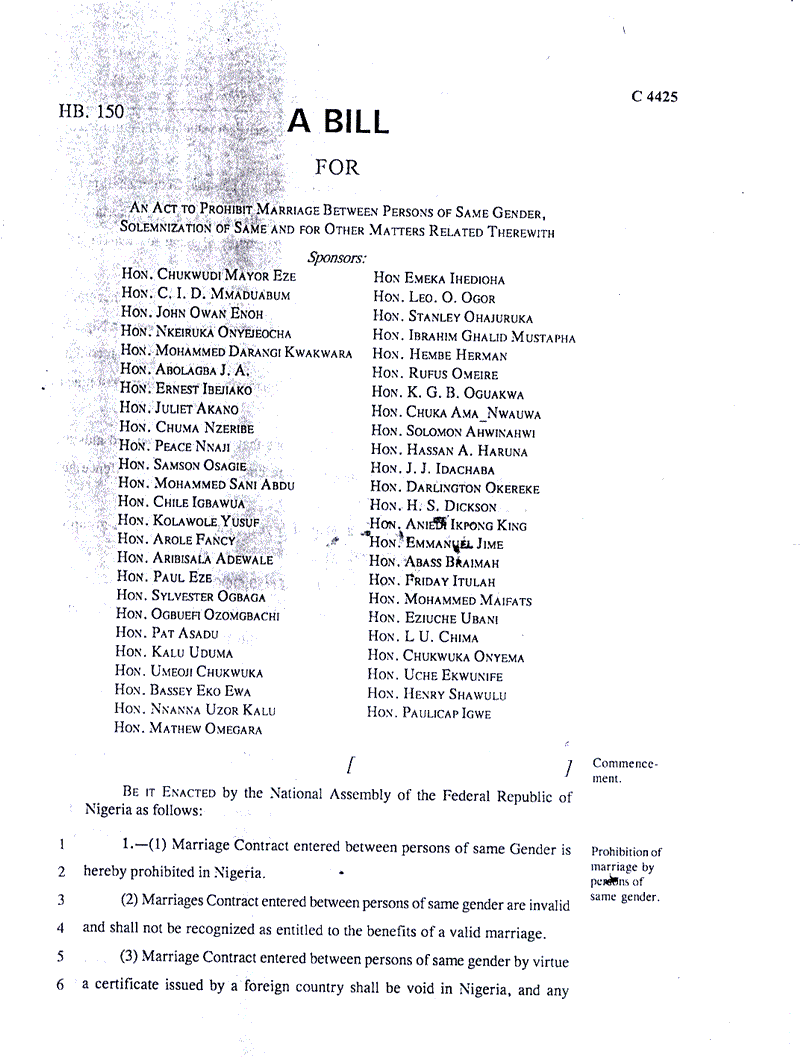
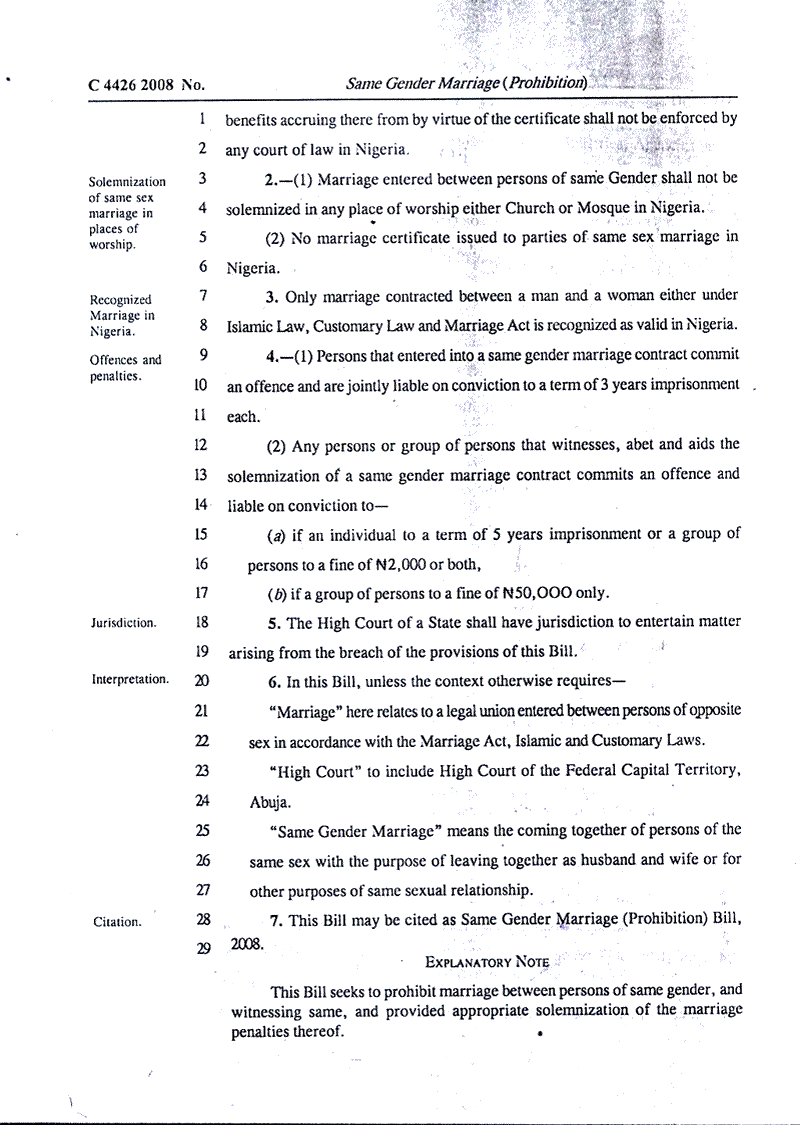
The full text of the legislation itself is now also available, it occupies only two pages:
See below for two other versions
Further reports of the hearing from Changing Attitude:
Report on the Hearing on the Same Gender Marriage (Prohibtion) Bill 2008 in Abuja, Nigeria which includes this:
…There was a heavy controversy between me and the Church of Nigeria (Anglican Communion) when I mentioned how Archbishop Akinola and the bishops of the Church of Nigeria (Anglican Communion) have committed themselves to the process of listening to LGBT people in the Lambeth Conference 1998 Resolution 1.10. Being committed to listen to LGBT people and coming to the hearing to support the bill is not honest. The representative of the Church of Nigeria (Anglican Communion) took offence and denied that.
and Church of Nigeria bussed people in to the Same Gender Marriage Bill hearing:
…On Wednesday, while we were outside waiting to be allowed to enter, some interesting things began to happen. Buses began to arrive carrying members of the Church of Nigeria (Anglican Communion) and the Joint Women’s Fellowship together with the Youth Fellowship buses from Jos. They parked right next to us.
The atmosphere became very tense for us lesbian and gay representatives. The church members looked at us with terrible hard faces. They were wearing T-shirts with the slogans saying: IT IS UNAFRICAN, IT IS UNGODLY, IT IS SENSELESS, UNCULTURAL…
…After which a Bishop said that clearly it was a big lie for any gay person to say that he was created by God. He also said from his statement that being gay was an acquired syndrome from the western world.
Friday evening update
Lionel Deimel has made available a more easily readable copy of the legislation, see
Akinola: Anglican Fundamentalist, Fascist, and Theocrat.
Saturday update
And there is a PDF of the legislation available also here.
41 CommentsMark Harris has collated some further statements by the Church of Nigeria (Anglican Communion) on the subject of homosexuality at Nigerian Anglicans ramp up the anti-gay rhetoric:
From Celebrating the ideals of GAFCON dated 24 February:
“the fellowship of Christian patriots in collaboration with Christian association of Nigeria (CAN) and the church of Nigeria (Anglican Communion) flagged off the service of stand up for Jesus Festival of praise and thanksgiving held at the National Christian Centre Abuja on Saturday.
It brought to the fore the war against homosexualism, lesbianism and same sex marriage being waged by the church lead by the primate of all Nigeria Anglican communion Most Rev Peter Akinola, At the service the fight against union of same sex received a boost following a unanimous support pledged by the Christian Association of Nigeria (CAN) and well meaning Nigerians.”
From HOMOSEXUALITY AND RELIGION dated 5 March:
7 CommentsUpdated Sunday
The BBC reports under the headline Nigeria gay activists speak out
Church groups spoke in favour of the bill, saying that gay marriage risked “tearing the fabric of society”.
“In the Bible it says homosexuals are criminals,” Pius Akubo of the Daughters of Sarah church told lawmakers.
Rev Patrick Alumake told the National Assembly the top leadership of the Catholic church in Nigeria supported the bill wholeheartedly.
“There are wild, weird, ways of life that are affecting our own culture very negatively, we have people who either by way of the media or travelling around the world have allowed new ideas which are harmful to our nation and our belief,” he said.
According to reports in Nigerian media The Church of Nigeria (Anglican Communion) was outspoken in its support for the legislation. See below the fold for detailed reports.
Changing Attitude reports that its Nigerian members spoke up, see Group leaders from Changing Attitude Nigeria present statement on Same Gender Marriage (Prohibition) Bill 2008 at public hearing in Abuja.
This is the legislation about which Amnesty International, and Human Rights Watch said:
13 CommentsNigeria’s proposed ban on same-sex partnerships an assault on human rights.
A bill now before the Nigerian National Assembly aims to outlaw marriages between individuals of the same sex – in a country where homosexuality is already criminalized. The bill would punish “the coming together of persons of the same sex with the purpose of leaving together as husband and wife or for other purposes of same sexual relationship” with up to three years’ imprisonment.
If passed, the bill would give licence to the authorities to raid public or private gatherings of any group of people they suspect to be lesbian, gay, bisexual or transgender. The measure would also increase the risk of violence and other acts of discrimination against individuals who are suspected of being lesbian, gay, bisexual or transgender.
“It is simply unacceptable to single out one group of people to be deprived of the rights we all enjoy,” said Aster Van Kregten, Amnesty International’s Nigeria researcher. “Legalising discrimination is reprehensible in itself and can only promote acts of hatred.”
In addition to the measures against those thought to be in same-sex relationships, the bill would authorise sentences of up to five years’ imprisonment and a fine of N2,000 (US$14) for any person who “witnesses, abets and aids the solemnization of a same gender marriage.”
These provisions would violate the rights to freedom from discrimination, freedom of private and family life, freedom of religion or belief, and freedom of association, guaranteed in the Nigerian constitution and by human rights treaties.
Bishop Alan Wilson has written two blog posts about this.
First, Ecclesiology: What is Church, then?
Saturday I drew the short straw — helping enable a discussion at Diocesan Synod on the ecclesiological dimensions of ordaining female bishops. What then is “Church?” I tried to frame the discussion in four dimensions of being Church.
Every licensing we proclaim “The Church of England is part of the One Holy Catholic and Apostolic Church.” What does this really mean?
Second, this supplement, Ecclesiology: fifth element?
5. Church as Pilgrimage
A lot of ecclesiology is based on how the ship is running, but the real question is where the ship is going! Christians do not see history as a giant circular recycling exercise, but a journey which begins in a garden and ends in a city.
All worth reading carefully.
3 CommentsFor background to this, see TA articles from last September, here, here and here.
Last week, just prior to a conference of the Liberal Democrats, the Guardian published a letter, defending faith schools and in particular their selection policies, which had again been criticised earlier in the week in a new research report from Research and Information on State Education. (Full report as a PDF here.)
Banning selection of pupils by faith in religious schools would be “perverse and unjust”, a group of religious organisations which run faith state schools in Britain argue today.
In an exclusive letter published in the Guardian today, a cross-denominational group of religious leaders, led by the Church of England Board of Education, defends selection of some students and staff on the basis of commitment to their faith.
The letter comes ahead of a policy debate on 5-19 education in England at the Liberal Democrats’ spring conference tomorrow, which calls for a ban on selection by faith in religious schools, and follows a critical report by academics at the London School of Economics…
That critical report was attacked by the same leaders, see for example Religious Intelligence Church hits back at school admission policy claims by Matt Cresswell.
Janina Ainsworth, Chief Education Officer for the Church of England, said that a damning report commissioned by the Research and Information on State Education trust (RISE) was based on “out-of-date information that takes no account of the recent changes to the Admissions Code”…
…Commenting on the report Ms Ainsworth said that those with an agenda against popular church schools were using the research as “an opportunity to try and wrestle power from local people and further centralise admissions decisions.”
She continued: “The findings of this report do not support the recommendations made: nowhere does it present evidence that schools are breaking their own admissions policies to select certain types of students.
“It is unclear on what basis this report can obliquely claim that those local people who give their time freely as school governors are in some way acting unfairly.”
She added: “Church attendance is the only measure our schools use when allocating places on the basis of faith, and you can’t get a much simpler way of assessing whether someone has a faith commitment or not.”
As it turned out, the Lib Dem conference didn’t approve the original motion calling for a ban on selection, but did approve the following:
ii) Requiring all existing state-funded faith schools to come forward within five years with plans to demonstrate the inclusiveness of their intakes, with local authorities empowered to oversee and approve the delivery of these plans, and to withdraw state-funded status where inclusiveness cannot be demonstrated.
They also voted for:
iii) Ending the opt-out from employment and equalities legislation for staff in faith schools, except those responsible for religious instruction.
An attempt to extend iii) to also exempt ‘the senior management team’ was defeated.
The BBC therefore reported this as Lib Dems back state faith schools.
On the other hand Ekklesia which is a founder member of Accord reported it differently:
Liberal Democrats vote to demand fairness from faith schools
Lib Dem policy on faith schools is inclusion ‘breakthrough’
People of faith speak out for inclusive schools policy
Why church schools can be less than Christian by Jeremy Chadd
The Archbishop of Canterbury delivered a lecture last Saturday in Cardiff.
Here’s the LamPal press release.
Here’s the full text.
Now here’s the press coverage:
BBC Church calls for ‘just’ recovery
The Times Ruth Gledhill Archbishop Dr Rowan William[s] blames government for economic crisis and her blog entry, Don’t blame greedy bankers – blame your own pride, Rowan tells Government. And republished the full text on the web here.
Guardian Sam Jones Don’t blame the bankers – deregulation and spending caused it too, says Williams and sidebar, In the archbishop’s words. Also an edited extract of the lecture, Rowan Williams Deeper than simple greed and also the full text on the web. Analysis by Andrew Brown at Cif Belief Deconstructing Rowan.
Telegraph no coverage so far that I could find.
Ekklesia Archbishop sets out fresh agenda for economic justice
21 CommentsThe Diocese of Quincy is reorganising itself, see ENS report, Diversity embraced as steering committee leads reorganization by Joe Bjordal:
A newly appointed steering committee, representing persons in the Diocese of Quincy who want to remain in the Episcopal Church, has met with the Presiding Bishop in New York, welcomed a bishop as consultant, and released a vision statement and immediate goals for the reorganizing diocese.
Last November, a number of clergy and laypersons in the Peoria, Illinois-based diocese voted to leave the Episcopal Church due to theological disagreements and align with the Argentina-based Anglican Province of the Southern Cone.
The reorganization moves are in preparation for a special synod meeting which has been called by Episcopal Church Presiding Bishop Katharine Jefferts Schori for Saturday, April 4 to be held at the Cathedral Church of St. Paul in Peoria. In a notice issued February 27, Jefferts Schori called for the synod, saying there was “no bishop of the Diocese of Quincy, or any qualified members of the standing committee of that diocese.”
The notice from the Presiding Bishop can be found in full here.
The Diocese of Fort Worth is seeking to recover control of its assets, see ENS report Continuing diocese requests ‘orderly transfer of assets’ by Pat McCaughan:
The standing committee of the continuing Episcopal Diocese of Fort Worth (Texas) and Provisional Bishop Edwin Gulick have written to former bishop Jack Iker to request a “peaceful and orderly transfer of property and other assets.”
“Our hope is to work together with those who left the Episcopal Church to make this period of transition as painless as possible in what has been a sad time for all of us,” said the Rev. Frederick Barber, president of the standing committee. “Those who left remain our brothers and sisters in Christ. But we also know we have a sacred responsibility to the Episcopalians of the diocese to be good stewards of property that is held in trust for generations of Episcopalians past and to come.”
The March 3 letter, written by chancellor Kathleen Wells, also asked that Iker and others not interfere with the reorganization of the continuing diocese; refrain from using the diocesan logo and seals and meet with representatives of the continuing diocese “to plan the orderly transition” of property and assets. Last November, Iker and some members of the diocese voted to realign with the Argentina-based Anglican Province of the Southern Cone.
The letter itself can be read in full as a PDF file here.
4 CommentsUpdated Sunday evening
Same-sex blessings are in the news again in Canada.
Ottawa
The Anglican Journal reports that Ottawa diocese appoints committee to consider ‘blessings’ and there is material in the March issue of Crosstalk in a PDF file. See cover story and then on page 2, Bishop John Chapman has written a column. The Journal reports:
The bishop of the diocese of Ottawa, John Chapman, has appointed a doctrine and worship committee to determine whether same-sex unions can be blessed on a limited basis in the diocese.
If the committee recommends that such blessings be allowed “in the spirit of experiential discernment,” Bishop Chapman said it would only be offered in one parish, St. John the Evangelist, an inner city parish which has long advocated for the rights of gays and lesbians.
“In the event that I instruct the parish of St. John the Evangelist to proceed, this is as far as I am prepared to move on the matter until General Synod 2010,” he said in his March column at the diocesan newspaper, Crosstalk…
Update His March column can be read in full as a web page here.
The National Post reported this under the headline Anglican diocese will defy and bless but also reported that the diocese denied it was breaking a moratorium:
…In a press release issued on Monday night, the diocese said: “Just as the Church was not able to come to a clear mind regarding the benefits of the ordination of women to the priesthood until it experienced the priestly ministry of women, Bishop [John H.] Chapman has taken the process of discernment with regards to same sex blessings to a place beyond discussion.”
and this was confirmed by a spokesman for the Anglican Church of Canada who said:
…what the Diocese of Ottawa is doing is not a breaking the ban but rather a continuation of their “discernment process.”
Niagara
The same Anglican Journal report goes on to cover a related development in the diocese of Niagara. Bishop Michael Bird reports here on his recent visit to Lambeth Palace. Here’s an extract:
26 Comments…In that interview I reviewed with him the multitude of task forces, hearings, Bishop’s statements, regional and parish meetings and the long list of Diocesan and General Synods that have discussed and wrestled with this issue since 1976. I gave him a full account of our dealings with dissenting parishes and the court proceedings we have been involved in. I shared with Archbishop Rowan our experience of the incredible contribution that gay and lesbian people have made and continue to make in every aspect of our Church’s life and witness, and expressed the overwhelming desire on the part of two Synod’s to move forward with the blessing of committed same-sex relationships for couples who have been civilly married. I also indicated to him my intentions with regard to my giving permission for these blessings to begin to take place.
One of the most powerful moments in the course of my fifty minute meeting with the Archbishop was the opportunity to describe the process of how our new Vision has emerged and how we believe that God is calling us as a Diocesan family to enhance and develop our work together under the five key areas of focus that are outlined in the Vision. In fact I indicated that it was my sense that the challenge the Vision offers us around the work of prophetic justice-making has made us even more determined to become a more open and inclusive Church.
Archbishop Williams listened carefully to my presentation and there was no doubt that I had his full attention. He thanked me for such a full and detailed report and he indicated how important this opportunity was for him to hear from me personally. We went on to have a very helpful and frank conversation about the implications involved and I expressed my own personal commitment and the strong desire of the Diocese of Niagara to remain in communication and dialogue with our sister and brother Anglicans around the world. I made it clear that we very much value and hold dear our membership in the Anglican Communion and we are grateful for his leadership and ministry…